
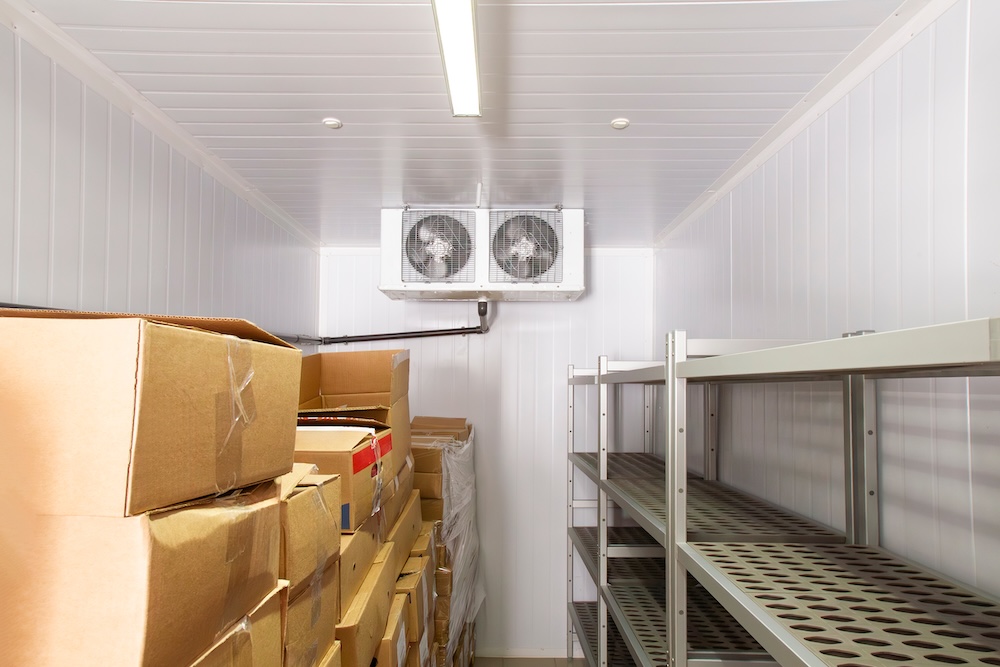
June and July in Los Angeles is usually when walk-in coolers can start failing. Not because the unit got older overnight, but because the math around it has changed.
A compressor’s job is to move heat from inside the box to the outside air. That’s an easy lift when it’s 65°F out. It’s a different job entirely at 100°F, and many operators don’t realize how different until the box temperature starts climbing during the 2 pm rush.
What Happens When The Compressor Doesn’t Get a Break
Spring conditions might have a compressor cycling on for 8 hours a day. The same unit, same box, and same product load come August; that number can hit 18 or 20 hours; sometimes it doesn’t shut off at all.
That extra runtime isn’t free because the motor is winding heat up. Fan bearings wear faster. Electrical contacts that were fine in May start hurting by July because they’re seeing more cycles than they were built for in a normal season.
Rooftop condensers have it even worse. Roof surface temps in LA summers can run 30 to 40 degrees hotter than inside air. A unit that is pulling air off a 140°F roof surface is going to be fighting a battle the spec sheet never accounted for.
Can the Head Pressure Climb Without Anyone Noticing?
Higher outdoor temperature means there is a higher head pressure, which means the compressor works against more resistance. More resistance means more amp draw, more heat inside the compressor housing, and more strain on everything downstream.
A dirty condenser coil makes the situation worse. A coil that has collected dust since October and never got cleaned can lose a significant amount of its heat rejection capacity just when the system needs it most. We see this issue constantly in June service calls. The unit was “fine” in April. Nobody touched the coil. Then it hit 95°F outside, and the whole thing fell apart.
What Happens to Walk-In Coolers When Doors Open More?
Summer usually means more foot traffic. More staff are grabbing cold drinks, there are more deliveries, and more prep work because the patio’s open and the menu’s usually longer.
Every time that door opens, warm humid air rushes in. It hits the evaporator coil and freezes there. If you give it a few weeks of heavy summer door traffic, that frost layer can get thick enough to stop airflow across the coil. The box temperature can creep up even though the compressor hasn’t stopped running. Staff usually blame the thermostat. It’s almost never the thermostat.
What Signs Show the Box May Be Depleting?
Box temperature drifting up 3 to 5 degrees in the afternoon and recovering overnight. A compressor can run constantly instead of cycling and ice will start forming on the coil or around the door gasket. A condenser fan motor that’s hot enough you don’t want to touch it. An electric bill on the refrigeration circuit that’s noticeably higher than last month’s.
One of these by itself, probably not urgent. Two or three together, that’s a system close to a breakdown.
What Actually Helps the Walk In Before the Next Heat Wave
If you clean the condenser coil in May, and not August, you might be able to save your walk in cooler. By the time it’s hot enough to notice the problem, the dust has usually been doing damage for weeks.
Inspect the door gasket. A tear you can barely see still lets in enough warm air to add real load to the compressor. We’ve replaced gaskets that looked fine from three feet away but were still letting in a steady stream of air up close.
Confirm the condenser fan is pulling the correct amp draw and is spinning freely. A weak motor does noticeably less work in July than it did in March, and that’s exactly when full airflow matters most.
Also check the refrigerant charge. Heat doesn’t cause a leak. It exposes one that was already there. A system running slightly low in spring often goes from “fine” to “failing” the moment head pressure climbs in summer.
Schedule a Walk-In Cooler Repair Service with Pacific Appliance Repair Today!
If a walk-in won’t hold temperature through the afternoon or the compressor sounds like it never shuts off, that’s not a problem to schedule around a slow week. Units in that state are usually a few weeks from full failure, and a failed walk-in means lost product on top of the repair bill.
Pacific Appliance Repair Services handles walk-in cooler repair and maintenance across Los Angeles, commercial kitchens and residential properties both. If your unit’s running hot or cycling more than it used to, get it looked at before the next 100-degree week makes the decision for you.