
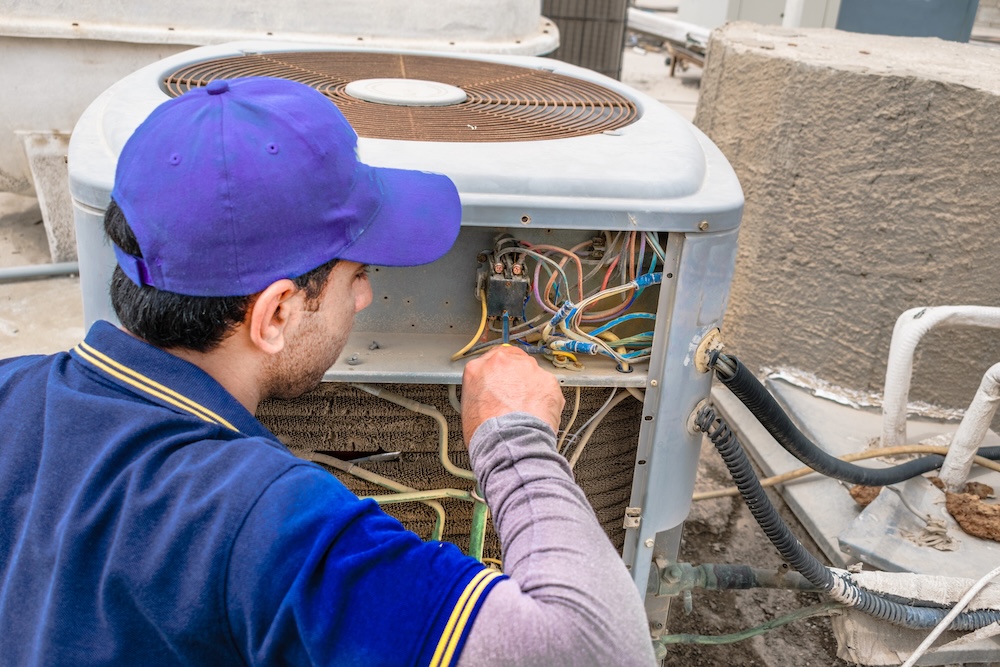
Most home AC units don’t fail suddenly. They will give you signs for days, sometimes weeks, before they actually start to quit. The problem is that most homeowners don’t notice until it’s 102°F outside and their house is already 85°F inside.
Catching the signs early in a Los Angeles summer matters more than in milder climates. A unit that is stringing along in May usually can’t survive the string of 100-degree days in July and August without breaking down completely.
Warm Air From Vents Signals Refrigerant or Compressor Trouble
If the air coming from the vents feels lukewarm instead of cold, that’s one of the top signs that something’s wrong. It could be low refrigerant from a leak. It could be due to a failing compressor that can’t build enough pressure to cool the air properly.
Either way, running the system in this state for days at a time can usually make it worse. A compressor that is working harder than it should will overheat faster, and that’s usually what turns an easily repairable issue into a full unit replacement.
Short Cycling Wears Down the Compressor Fast
A healthy AC will run in full cycles, usually 15 to 20 minutes at a time during the peak heat hours. A unit that’s struggling will turn on and shut off every few minutes instead, which is sometimes called short cycling.
This will put a lot of stress on the compressor and electrical components. Each start-up uses a surge of power, and a unit cycling 4 or 5 times in 20 minutes puts that surge through the system far more often than it was built to handle.
Weak Airflow Often Means a Clogged Filter or Failing Blower
Reduced airflow from the vents, even when the air feels cool, points to a few common issues. A dirty filter is the easiest fix and the most overlooked. A failing blower motor is far more serious and will usually show up as a noticeable drop in the strength of the airflow over a week or two rather than all at once.
LA’s dust and pollen load means filters can clog faster here than in a lot of other regions, especially during dry Santa Ana wind conditions.
Unusual Noises Reveal Mechanical Wear
If you hear grinding, squealing, or banging sounds from the outdoor unit, it usually means something mechanical is wearing out, whether that’s a bearing, a belt, or a loose component hitting the fan blade. If you hear a clicking sound on startup that wasn’t there before, it can mean a failing capacitor, which is a common and relatively inexpensive fix if caught early.
Ignoring these noises for a week can tend to turn a $200 repair into a $1,500 one.
Rising Energy Bills Show the System Working Harder
A system that’s losing its efficiency pulls more power to do the same job. If a summer electric bill jumps 20% or more without a change in usage habits, the AC unit is a likely cause, especially if it’s paired with any of the other signs we discussed.
Frequent Repairs Point to End of Life
Most residential AC units last 12 to 15 years in Southern California’s hot climate. A unit that needs its third repair call in two years is usually past the point where a repair will make financial sense, even if each individual fix seems small.
Acting Before the Breakdown
A system showing two or more of these signs during a heat wave is close to failing completely, not just running poorly. Waiting for it to die fully usually means scheduling emergency service during the busiest week of the year, when wait times are longest and temperatures are highest.
Pacific Appliance Repair Services handles AC repair for homes across Los Angeles. If the system’s been acting up, getting it looked at now is a lot easier than getting it looked at after it stops working during a heat wave.