You walk into your kitchen before service, and there’s water pooling under the reach-in. Or your walk-in cooler has been leaving a trail across the floor for the past week and you’ve been mopping around it. Sound familiar? A leaking commercial refrigerator is one of the most common problems restaurant operators deal with. Let’s talk about what’s actually going on, and when it’s time to call in a professional for commercial refrigerator repair in Los Angeles.
The thing we want you to know is that not every puddle means your refrigerator is on its way out. Some causes of water leaks are relatively minor and inexpensive to fix. But you’ll want to make sure that you’re truly fixing everything, as even small, slow leaks have a way of turning into a much bigger and more expensive problem. Floors can experience damage, create slip hazards, and contribute to mold growth.
Understanding the most common causes allows you to recognize when something’s wrong and have an informed conversation with a qualified technician.
The Most Common Causes of Commercial Refrigerator Leaks
1. A Clogged or Frozen Drain Line
A clogged or frozen drain line is one of the most common causes of a refrigerator leaking water. Every refrigerator has a drain line that takes condensation away from the evaporator coils and out of the unit.
In a busy commercial kitchen, that drain line can get clogged with food debris, grease buildup, or mold. It can also freeze solid if the defrost cycle isn’t working the way it should. When the drain is blocked, water has nowhere to go except onto your floor. The repair typically involves a drain cleaning or a defrost heater or timer replacement.
2. A Damaged or Worn Door Gasket
The door gasket (the rubber seal that runs around the perimeter of the refrigerator door) is responsible for keeping cold air in. It’s also responsible for preventing warm, humid air from getting inside the unit. If the seal is cracked, torn, or worn, warm air can come through the cabinet, causing condensation and water drips. This is why you may notice pooling water near the base of the door or frost buildup around the door frame. Fortunately, gaskets are a relatively quick and inexpensive commercial refrigerator repair.
3. Dirty or Blocked Condenser Coils
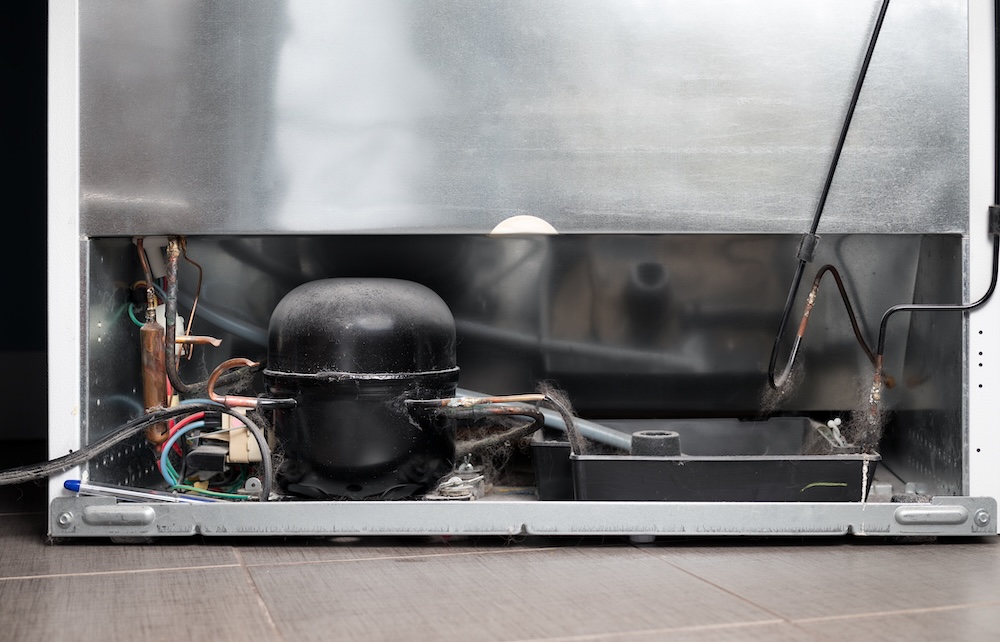
Condenser coils need air to do their job. In a busy commercial kitchen, those coils can accumulate grease, dust, and debris quickly, especially if the unit is located near cooking equipment. However, when the coils are blocked, the refrigerator has to work harder to maintain temperature, which causes the evaporator coils inside to ice up. When that ice eventually melts, you get water overflowing.
4. A Malfunctioning Defrost System
Commercial refrigerators run automatic defrost cycles to prevent ice from building up on the evaporator coils. When the defrost system stops working, ice accumulates faster than normal. Eventually that ice melts, causing water to pool onto the floor. Furthermore, a defrost system that isn’t working puts strain on the compressor.
5. Improper Leveling
This one surprises a lot of people. Commercial refrigerators are made to sit at a specific angle so that the condensation can drain properly. If the unit has moved, let’s say, after a cleaning, water that should be draining away ends up pooling and leaking out. The good news is that it’s an easy fix, but only if you know to check for it. To confirm whether this is an issue, you can use a level.
6. An Overflowing or Cracked Drain Pan
The drain pan sits underneath the unit so it can easily collect condensation. But if the pan cracks, or if the evaporation rate can’t keep up, the pan overflows and water ends up on your floor. Luckily, a cracked pan is an easy replacement. However, a pan that continuously overflows signals that something else is going on with the unit.
When a Leak Becomes a Health Code Issue
Standing water near food storage or prep areas is a potential health code violation in Los Angeles County. Beyond the slip hazard, chronic moisture creates mold and bacteria growth. If your commercial refrigerator has been leaking for more than a day or two, especially near food, get someone in to look at your refrigerator right away.
Is Normal Condensation Ever “Normal”?
This is a great question and one we hear often. A small amount of condensation on the exterior of a refrigerator unit can be normal. If you’re seeing light moisture on the outside of the door or cabinet during a particularly busy service, that alone isn’t necessarily cause for alarm.
What’s not normal is water pooling on the floor, ice buildup inside the cabinet, water dripping from the interior ceiling of the unit, or any moisture near the electrical components. Those are all signs that something mechanical is happening and requires your attention.
What Happens If You Ignore a Leaking Commercial Refrigerator?
Overlooking a refrigerator leaking water is never a good idea. Operators may assume they have no choice but to mop around a leak and move on during the middle of service, but consequences can happen:
- Compressor strain. Many of the causes above (e.g., dirty coils, failing defrost system, blocked drain) force the compressor to work harder than it should. That speeds up wear and shortens the unit’s lifespan.
- Temperature instability. A unit that’s fighting against one of these issues often can’t hold consistent temperatures, putting you at risk of a health inspection violation.
- Floor and infrastructure damage. Water exposure damages flooring, subflooring, and nearby equipment over time. These costs go well beyond the original refrigeration repair.
- Mold and sanitation issues. Moisture in a warm kitchen environment is a mold risk. Once mold takes hold in a drain line or beneath a unit, remediation becomes a much bigger project.
- Full unit failure. In the worst case, what started as a clogged drain or a worn gasket ends in a compressor failure and a unit that needs to be replaced.
What a Technician Will Look For
When a qualified technician responds to a call for commercial refrigerator repair, there is a strict process they follow. It includes:
- Identifying where the water is coming from
- Inspecting the drain line and drain pan
- Checking the door gaskets
- Assessing the defrost system
- Looking at the condenser coils
- Verifying the unit is level
Fortunately, the cause is identifiable during the first visit (in most cases), and many of the most common repairs can be completed the same day.
What you want to avoid is a technician who simply patches up the visible symptom without identifying the underlying cause. As an example, a drain cleaning that doesn’t address why the drain is clogging will only buy you a few weeks and then the problem is bound to return.
Is Your Refrigerator Leaking Water? We Can Be There Today.
Pacific Appliance Repair’s NATE-certified technicians diagnose and fix commercial refrigerator leaks across Los Angeles. We have same-day, no emergency fee appointments, with a 90-day warranty on every commercial refrigerator repair. If your refrigerator is leaking, give us a call today at 213-234-2821. We’ll figure things out so that you can get back in business.